
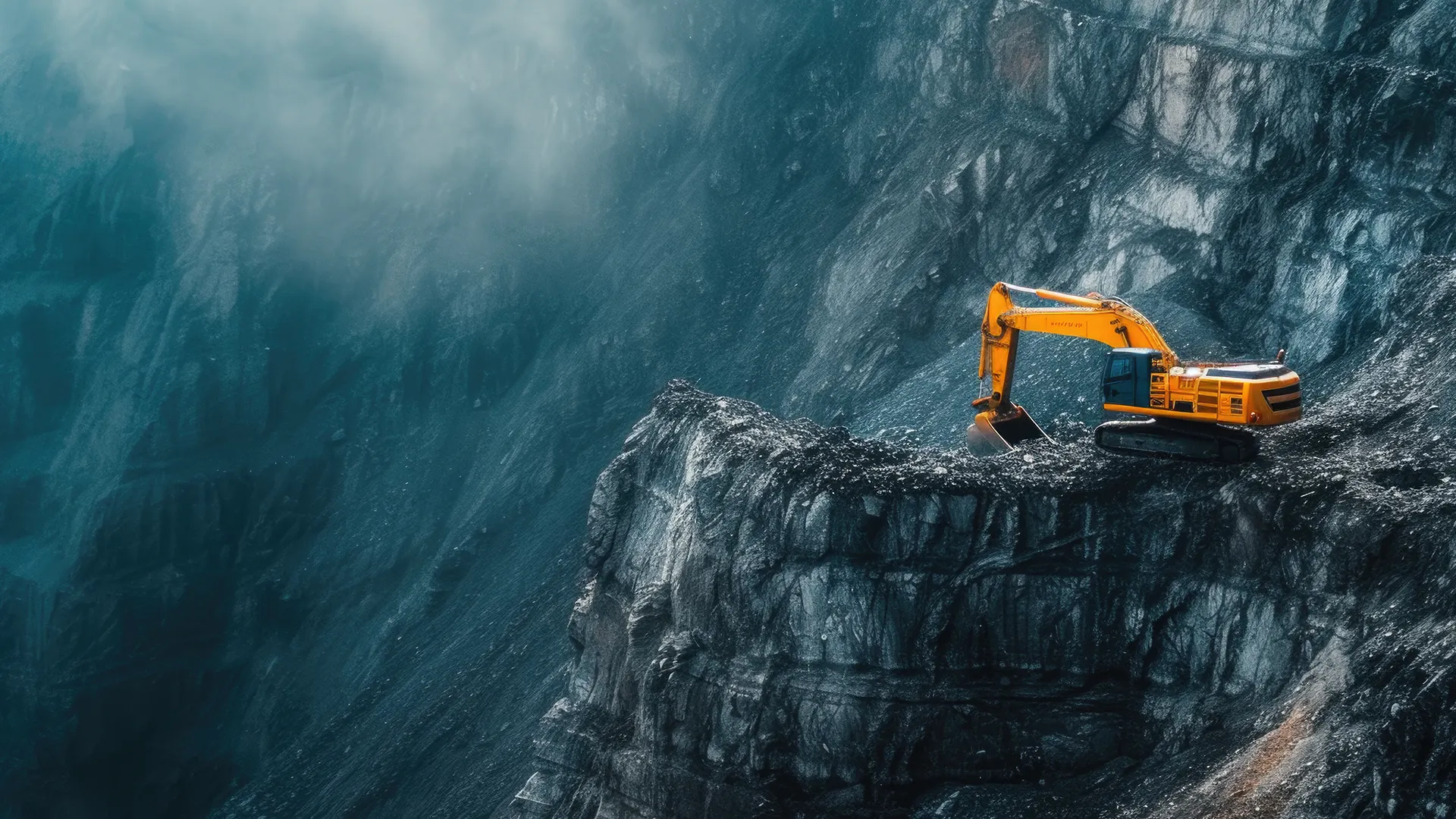

Mining equipment encompasses all specialized heavy machinery and tools designed for extracting, handling, and processing minerals from the earth. From surface pits spanning kilometres to narrow underground tunnels, this equipment determines whether mining operations achieve their production targets safely and profitably.
The evolution from cable-operated shovels in the 1920s to today’s autonomous haul trucks and battery-electric loaders represents one of the most dramatic transformations in any industry.
Equipment choices directly impact three critical metrics: safety performance, cost per tonne extracted, and environmental footprint. Getting these decisions right can mean the difference between a profitable 30-year operation and a costly failure.
This guide walks through major equipment categories, selection criteria, maintenance strategies, and the emerging technologies reshaping the mining sector.
Key takeaways:
- Equipment directly influences safety, operating costs, and emissions
- Categories align with the mining value chain from extraction to processing
- Autonomous and electric technologies are accelerating adoption since 2016
- Lifecycle thinking beats lowest-upfront-cost purchasing
Core Categories of Mining Equipment
Modern mining relies on six primary equipment groups that work together across the value chain: exploration, development, extraction, material handling, and processing.
Each category serves a distinct function, though the machinery often works in coordinated fleets. A mismatch between equipment types can inflate costs by 10-30% over a mine’s life a lesson learned at major copper operations worldwide.
Capacity and sizing of mining equipment must match the daily tonnage requirements to avoid production bottlenecks or excessive congestion from oversized machinery.
Equipment categories and functions:
| Category | Primary Function | Typical Deployment |
|---|---|---|
| Drilling | Create blast holes and exploration samples | Surface and underground |
| Loading | Transfer broken rock to haulage | Surface and underground |
| Hauling | Transport ore and waste | Surface and underground |
| Dozing | Push material, maintain roads | Primarily surface |
| Blasting | Fragment rock for extraction | Surface and underground |
| Processing | Crush, screen, and convey material | Both environments |
Drilling prepares for extraction with rotary blasthole drills achieving 50-100 metres per hour penetration. Loaders like electric rope shovels cycle every 30-45 seconds. Trucks carry 240-400 tons per load, emphasizing their ability to move massive volumes of rock. Crushers break down large, mined rocks into smaller, manageable sizes for refining, reducing boulders to fragments at 500-2000 tons per hour.
Surface Mining Equipment
Surface mining dominates global production, accounting for approximately 90% of copper output through truck-shovel operations in open-pit, strip, and quarry environments. Large copper, iron ore, coal, and gold mines have refined these systems since the 1970s.

Drilling units:
- Rotary blasthole drills: 270-311mm diameter holes, 60-80m/hour penetration
- Down-the-hole (DTH) rigs: 150-250mm holes in hard rock at 20-40m/hour
- Top hammer rigs: Shallower quarrying applications
Loading equipment:
- Hydraulic excavators: 100-800 tonne operating weight, 20-50m³ buckets
- Electric rope shovels: 100+ tonne payloads, 30% lower long-term energy costs
- Front-end loaders: 200-400 tonne class for scattered ore pockets
Haul trucks: Ultra-class trucks like the Caterpillar 797F carry 400+ tonne payloads with diesel-electric propulsion. Autonomous operation in iron ore mines since 2016 has boosted utilization from 80% to 90% while reducing tire wear by 15%.
Auxiliary surface equipment includes motor graders leveling roads to reduce truck cycle times 10-20%, wheel dozers for stockpile management, water trucks for dust suppression, and draglines for coal stripping.
Draglines and High-Volume Overburden Removal
Walking draglines represent some of the largest machinery ever built, weighing 5,000-13,000 tonnes with buckets holding 40-100m³. These machines dominate coal and phosphate mines where massive overburden removal is required.
The cost advantage over truck-shovel systems is substantial: $1-2 per cubic metre versus $3-5 for conventional fleets over 20+ year mine lives. This stems from 90% lower fuel costs (electric grid versus diesel) and eliminated road maintenance.
Key advantages:
- Bucket capacities reaching 100m³ in large rock environments
- 100m+ casting distances via long booms
- Service lives exceeding 100,000 operating hours with retrofits
- Modern digital controls improving cycle times by 20%
Limitations include restriction to soft strata under 50m depth and high capital costs of $100-200M per unit.
Dozers and Support Machines
Large machinery like mining-class track-type tractors (70+ tonnes) perform critical support functions that directly affect haulage productivity. The Caterpillar D11 at 104 tonnes with 850hp exemplifies this category.
Primary dozer applications:
- Dump preparation: Layering 1m lifts to 95% compaction
- Ripping: Fracturing 2m overburden at 5-10m/minute
- Road building: Constructing berms at proper slopes
- Reclamation: Final landform shaping
Poor road maintenance dramatically impacts costs. A 1% increase in road roughness adds approximately 0.5L of fuel per tonne-kilometre and increases cycle times by 15%. Support machines like wheel tractor scrapers, graders, and compactors maintaining haul roads to optimal standards deliver measurable fuel savings.
Underground Mining Equipment
Underground mining employs methods including room and pillar, longwall, block caving, and cut-and-fill each requiring characteristic equipment adapted to confined, demanding environments. Underground mining tools include continuous miners, jumbo drills, loaders, and longwall mining machines, which are specifically designed for the challenges of mining below the surface.

Development equipment:
- Jumbo drill rigs: 4 booms drilling 54mm holes at 2-3m/minute
- Bolters: Installing ground support at 20+ bolts per hour
- Development loaders: Mucking headings at 10m³/shift
Production equipment:
- Continuous miners: Cutting 5 tonnes/minute via rotating drums
- Longwall shearers: Advancing 10-20m/day on coal faces
- LHDs: 3-21m³ buckets for load materials in stopes; Load-Haul-Dump (LHD) machines are designed to work in tight tunnels and move materials to the surface.
Haulage solutions: Ventilation constraints limit diesel emissions underground, driving adoption of battery-electric trucks achieving 8-hour shifts on 400kWh packs. Conveyors handle 500+ tonnes per hour on dedicated routes, while rail systems serve 1-2km transport needs. Underground loaders and trucks are capable of moving many tons of rock and ore efficiently, highlighting their powerful capacity in underground mining operations.
LHDs and Underground Haul Trucks
Load-haul-dump machines serve as the primary loading unit in underground metal mines. The Sandvik Toro TH663i exemplifies current capability: 21m³ bucket, 40-tonne payload, cycling 15-20 tonnes per minute.
Battery-electric LHDs introduced commercially since 2018 cut heat generation by 50% and ventilation requirements by 40% compared to diesel equivalents. The tradeoff is 20-30% higher capital cost, offset by reduced ventilation infrastructure.
Fleet configurations:
- 3-5 LHDs typically feed each 50-tonne truck at ore passes
- Low-profile designs (under 3.5m height) fit restricted headings
- Equipment can be controlled remotely from surface for safety in unsupported ground
Underground haul trucks in the 30-70 tonne class transport ore to surface or processing facilities, with e-diesel hybrids emerging to meet emission compliance.
Longwall and Continuous Mining Systems
Continuous miners dominate room and pillar coal operations, with machines like the Joy 12CM27A accounting for 45% of U.S. coal production. Cutting drums scrape coal from exposed seams while onboard gathering systems load materials onto conveyors.
Longwall systems integrate multiple components:
- Shearers with 1500hp ranging arms cutting 0.6m slices
- 160+ hydraulic roof supports per face yielding 1000-tonne capacity
- Armored face conveyors at 2000 tonnes per hour
- Stageloaders connecting to gate road conveyors
Modern longwall faces achieve 20,000-50,000 tonnes per shift. Automation introduced since the 2000s allows shearers to be controlled remotely via inertial navigation, boosting uptime from 70% to 85%.
Material Handling and Processing Equipment
Once ore or coal is extracted, material processing and transport equipment determines throughput to finished products. Crushing and screening operations bridge extraction and refining.
Crusher types:
- Primary jaw crushers: 1500 tonnes per hour, reducing 1200mm feed to 200mm
- Gyratory crushers: 10,000 tonnes per hour for iron ore operations
- Cone crushers: Tertiary reduction for finer sizing
- Impact crushers: Soft rock and sand applications
Screening equipment uses vibrating decks to sort material by size at 1000+ tonnes per hour. Feeders regulate flow into crushers, while stockpile systems manage ore grades before further processing of gravel, soil, and other materials.
Crushing and Grinding Circuits
Comminution dominates energy consumption in metal mines, often exceeding 40-50% of total site electricity. After primary crushing, material processing continues through grinding circuits.
Key equipment:
- SAG mills: 36ft diameter, 25MW, treating 2000-5000 tonnes per hour
- Ball mills: 18ft diameter for finegrinding to 75µm liberation size
- HPGRs: 30% less energy than SAG/ball circuits with lower media consumption
HPGR-based flowsheets in operations like Kiruna iron have cut media costs by 50% while scaling throughput to 100,000+ tonnes per day. These circuits break large rocks progressively until minerals can be separated through refining processes.
Conveyors and Bulk Transport Systems
Conveyor systems offer exceptional performance advantages over truck haulage for sustained material movement, reducing costs to $0.50-1 per tonne versus trucks at $2-4 per tonne.
Configurations:
- Overland belts: 1200-2400mm width, spanning several kilometres
- In-pit systems: Mobile crushers feeding 5km belts, reducing haulage 40%
- Underground belts: Fire-retardant construction for safety compliance
Reliability depends on condition monitoring systems detecting belt rips within seconds and tracking idler health. Over 30-year mine lives, conveyors deliver 70% lower CO2 emissions than equivalent truck fleets a critical factor for distribution of sustainability commitments.
Specialized Mining Equipment and Emerging Technologies
Since approximately 2015, safety requirements, digitalization, and environmental regulations have accelerated adoption of specialized equipment across the mining industry.

Autonomous haulage systems (AHS): Fortescue’s iron ore operations run 100+ Komatsu 930E trucks with LiDAR, GPS, and 4G connectivity. Results include 20% productivity gains with zero harm-hours recorded.
Drones and inspection technology: DJI Matrice units produce 3D highwall maps at 1cm accuracy, perform tailings volumetrics, and inspect areas unsafe for personnel access at any mining site.
Battery-electric equipment: Underground battery systems reduce diesel particulate emissions to zero while cutting operating costs 30%. Machines like Normet Charmec sprayers demonstrate how innovation addresses emission regulations.
Digitalization, AI, and Condition Monitoring
Modern mining equipment embeds sensors collecting real-time data on engine health, payload accuracy to ±2%, and fuel consumption to 0.1L precision. Telematics platforms introduced during the late 2010s transform this data into actionable intelligence.
AI analytics predict component failures by analyzing vibration patterns and temperature trends. Fleet management systems optimize dispatch decisions, improving cycle times by 15% and pushing availability toward 92%.
Practical applications:
- Predictive maintenance reducing unplanned downtime 30%
- Real-time payload monitoring improving truck loading
- Geo-fencing for safety compliance in high-risk zones
Equipment Selection, Ownership Models, and Maintenance
Selecting mining equipment requires balancing ore body geometry, production targets, geotechnical conditions, and life-of-mine planning. The wrong choice compounds costs over decades.
Selection criteria:
- Capacity matching: Maintain 4:1 truck-shovel ratios
- Fleet compatibility: Standardize tires, transmissions, hydraulic cylinders
- Efficiency: Tier 4 engines deliver 10% fuel savings
- Automation readiness: 5G connectivity for future upgrades
- Climate capability: Arctic enclosures for extreme environments
Ownership models:
- Outright purchase: 60% of fleets globally
- Leasing: Flexibility for startup operations
- Contract mining: Full fleet services at $2/tonne carried
- Rental: Peak demand coverage
Preventive and predictive maintenance programs extend equipment life beyond 40,000-60,000 operating hours through oil analysis every 250 hours, component tracking, and planned rebuilds.
Aftermarket Parts, Rebuilds, and Remanufacturing
Reliable supply chains for engines, transmissions, final drives, and undercarriage parts prevent costly production losses exceeding $1M per day at major operations.
Key strategies:
- Rebuild programs return components to 70% of new life at 50-60% cost
- Standardized components across fleets reduce inventory 40%
- Planned component exchanges during scheduled shutdowns prevent failures
- Global distribution networks deliver critical parts within 2 days to remote locations
Companies like holt manufacturing company and similar heavy equipment distributors play vital roles ensuring parts availability for customers operating in remote regions.
Safety, Environmental Impact, and Regulatory Considerations
Safety and environmental regulations establish minimum standards that drive equipment design across the world. Compliance requirements vary by country and commodity but share common themes.
Safety-critical features:
- ROPS/FOPS cabs surviving 10g rollovers
- Collision avoidance systems with 360° radar
- Proximity detection halting equipment at 2m distance underground
- Fail-safe spring brakes for reliability
Environmental compliance:
- Tier 4/Stage V engines: Under 0.4g/kWh NOx emissions
- Battery-electric adoption addressing diesel particulate concerns
- Dust suppression systems at 1000L/minute capacity
- Spill containment for hydraulic systems
These regulations fuel continuous construction and innovation in equipment design, with incidents reduced 50% since 2010 through technology adoption.
Conclusion: Aligning Mining Equipment with Long-Term Strategy
The right combination of mining equipment underpins safe, productive, and sustainable mining operations over decades. Equipment decisions made today will shape whether operations meet 2030-2050 decarbonization goals while maintaining profitability through commodity cycles.
Modern mining demands viewing equipment not as standalone tools and machines but as integrated systems supported by digital platforms, aftermarket services, and skilled operators. The trajectory from manual cable shovels to autonomous electric fleets continues accelerating.
Core principles for equipment strategy:
- Match equipment to ore body and production requirements
- Consider lifecycle costs over 10-15 years, not just purchase price
- Plan for automation and electrification upgrades
- Maintain reliable aftermarket support and parts access
- Integrate digital monitoring for predictive maintenance
The mines achieving exceptional performance in coming decades will be those treating equipment investment as strategic infrastructure, not procurement transactions.
Frequently Asked Questions (FAQs)
What types of mining equipment are used to extract coal?
Mining operations to extract coal commonly use equipment such as continuous miners, draglines, hydraulic mining shovels, and highwall miners. These machines are designed to efficiently dig and load coal from both surface and underground mines.
How do mining applications influence equipment selection?
Different mining applications such as surface mining, underground mining, or placer mining—require specialized equipment tailored to the environment and extraction method. For example, surface mining uses large haul trucks and excavators, while underground mining relies on compact loaders and jumbo drills.
What is a waste area in mining, and how is it managed?
A waste area refers to sections of a mine where non-valuable materials or overburden are deposited during extraction. Managing waste areas involves using dozers, scrapers, and haul trucks to move and store waste efficiently while minimizing environmental impact.
What role does digging equipment play in mining operations?
Digging equipment, such as hydraulic excavators and shovels, is essential for breaking and loading rock and minerals. These machines enable efficient material extraction by digging into ore bodies or overburden and transferring material to haul trucks or processing facilities.
How important is equipment maintenance in mining?
Regular maintenance is critical to ensure safety, reliability, and operational efficiency. Preventive and predictive maintenance programs reduce downtime, extend equipment life, and help meet safety and environmental standards in mining operations.
